


Concrete driveway maintenance in West Michigan includes annual sealing, prompt crack repair, proper snow removal techniques, and avoiding deicing chemicals that damage the surface. A well-maintained concrete driveway is designed to last 30 years or more, while a neglected one can develop spalling and structural cracks within a decade. Since 2016, the team at Cole Concrete has poured and maintained driveways across Grand Rapids and surrounding communities.
A homeowner in Grandville called us last spring about a driveway that had been poured only five years earlier by another contractor. The surface was flaking in large patches near the garage, and two cracks had widened over winter to nearly half an inch. The concrete itself was sound, but five winters without sealing and regular rock salt application had destroyed the top layer. That kind of preventable damage is exactly what a basic maintenance routine avoids.
Spring Inspection and Cleaning

After the last frost clears in the Grand Rapids area, inspect your entire driveway surface before warm-weather use picks up.
- Look for new cracks. Hairline cracks under 1/8 inch are cosmetic and can be sealed with a concrete crack filler. Cracks wider than 1/4 inch or those raised on one side may indicate a structural issue requiring professional concrete repair.
- Check for spalling. Flaking or pitting on the surface usually means moisture penetrated the concrete during freeze-thaw cycles. Minor spalling can be patched, but widespread damage often requires resurfacing.
- Pressure wash the surface. Use 2,500 to 3,000 PSI to remove salt residue, oil stains, and organic buildup from winter. A clean surface also lets you see damage you’d otherwise miss.
Summer Sealing and Stain Prevention
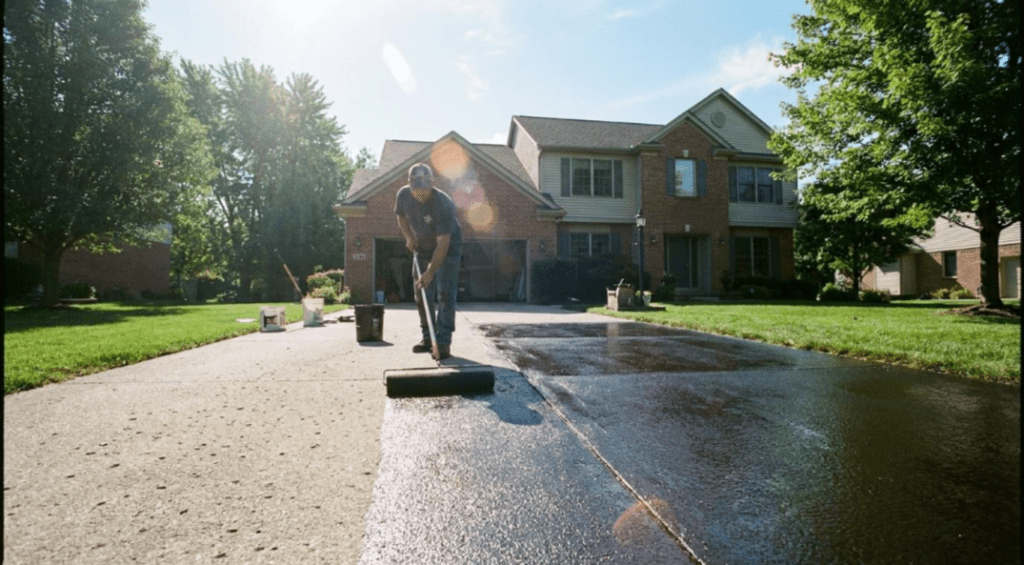
Summer is the best time to seal your concrete driveway. West Michigan’s July and August temperatures consistently stay in the ideal 50°F to 85°F application range, and lower humidity speeds curing.
Apply a penetrating or acrylic sealer every two to three years. Penetrating sealers work best for driveways because they block moisture without creating a slippery film. If your driveway has decorative elements, an acrylic sealer enhances the color while still offering protection.
For oil and fluid stains from parked vehicles, clean spills within 48 hours using a degreaser or dish soap and hot water. Concrete absorbs oil quickly, and stains left through the summer become nearly permanent.
Fall Preparation for Freeze-Thaw Season

West Michigan’s first freeze often arrives by late October, so September is your last chance to prepare.
- Fill any cracks that developed over the summer. Even small cracks allow water to enter, and water that freezes inside concrete expands by roughly 9%, widening those cracks with each freeze-thaw cycle.
- Clear vegetation from expansion joints. Weeds and moss hold moisture against the concrete and accelerate joint deterioration.
- Trim overhanging branches. Falling leaves trap moisture on the surface, and branches that drop in ice storms can chip concrete edges.
- Confirm your sealer is intact. Pour water on the surface. If it beads, you’re protected. If it absorbs within 30 seconds, apply a fresh coat before the first frost.
Winter Snow Removal and Deicing

Michigan winters hit concrete hard. How you handle snow and ice makes a measurable difference in your driveway’s lifespan.
Smart Snow Removal
Use a plastic-edged snow shovel or a snowblower to clear snow. Metal blades scrape the surface, chipping the sealed concrete. Plow carefully if using a truck-mounted plow: dropping the blade too low gouges the surface, especially on stamped or colored driveways.
Deicing Alternatives That Protect Concrete
Rock salt (sodium chloride) is the worst option for concrete driveways. It accelerates spalling by forcing extra freeze-thaw cycles in the surface layer. Calcium chloride and magnesium chloride are less damaging but still cause wear over time. Sand provides traction without any chemical damage to the surface. For Grand Rapids homeowners with newer concrete (under one year old), avoid all chemical deicers entirely during the first winter.
Frequently Asked Questions
How often should I seal my concrete driveway in Michigan?
Every two to three years for most West Michigan driveways. Driveways exposed to heavy vehicle traffic or direct road salt runoff may need resealing closer to every 18 months. Cole Concrete recommends testing the water bead method each spring to determine if resealing is needed that year.
Can I repair concrete driveway cracks myself?
Hairline cracks under 1/8 inch respond well to DIY concrete crack filler available at any hardware store. Wider cracks, uneven sections, or areas where the concrete has heaved require professional assessment because they often indicate subgrade issues beneath the slab that surface patching won’t fix.
Does sealing a concrete driveway prevent all winter damage?
Sealing significantly reduces freeze-thaw damage by blocking moisture from entering the concrete, but it doesn’t eliminate risk entirely. Proper drainage, careful snow removal, and avoiding chemical deicers work alongside sealing to give your driveway the longest possible lifespan in West Michigan’s climate.
Give Your Driveway the Care It Needs

A concrete driveway that gets seasonal attention lasts decades longer than one left to weather Michigan’s extremes alone. Spring cleaning, summer sealing, fall prep, and smart winter practices are straightforward tasks, and most take a single afternoon.
If your driveway already shows cracks, spalling, or surface wear, contact Cole Concrete online or call (231) 349 2883 for a professional assessment and repair plan.

Dylan Cole is the owner of Cole Concrete, a concrete company committed to delivering quality craftsmanship and dependable service. With a passion for the trade and a personal stake in every job, Dyan and her team take pride in providing reliable concrete solutions for residential and commercial clients alike.