


Concrete floors, whether in your garage, basement, or as a stylish polished surface in your home, are celebrated for their durability and low maintenance. However, even the toughest surfaces need proper care to maintain their appearance and longevity. A common question we hear from homeowners in the Grand Rapids area is: how do you clean concrete floors without causing damage, especially if they have decorative finishes?
At Cole Concrete, we don’t just install beautiful concrete; we also provide the expertise to help you maintain it. The key to successful concrete floor cleaning is understanding the type of concrete you have and using the right products and techniques.
Step 1: Identify Your Concrete Floor Type

Before you start scrubbing, it’s crucial to know what kind of concrete floor you’re dealing with. The cleaning method for a sealed, polished basement floor is very different from that of an unsealed garage floor.
| Concrete Floor Type | Typical Location | Key Cleaning Consideration |
|---|---|---|
| Unsealed/Broom Finish | Garages, Patios, Driveways | Highly porous; requires deeper cleaning for stains |
| Sealed/Epoxy Coated | Basements, Commercial Spaces | Non-porous; easier to clean, but harsh chemicals can damage the sealant |
| Polished/Decorative | Interior Living Spaces, Patios | Requires gentle, pH-neutral cleaners to protect the finish and color |
For decorative concrete, such as stamped patios or colored floors, the goal is to clean without stripping the protective sealant or making the color fade. You can find examples of the beautiful finishes we install on our decorative concrete page.
Step 2: Essential Cleaning Tools and Supplies

You don’t need a cabinet full of harsh chemicals. In fact, for most routine cleaning, simple, gentle solutions are best.
For Routine Cleaning (Sealed and Polished Floors)
pH-Neutral Cleaner: Mild dish soap or a cleaner specifically formulated for concrete is ideal. Avoid ammonia, bleach, or citrus-based cleaners, as these can dull the finish and degrade the sealant over time. For large or heavily trafficked floors, a dedicated concrete floor cleaner is recommended.
Soft-Bristle Brush or Mop: Use a soft mop or non-abrasive brush. Abrasive pads or wire brushes can scratch the surface, especially on polished floors.
Warm Water: Often enough for light dirt and dust.
For Deep Cleaning and Stain Removal (Unsealed Floors)
Degreaser: Necessary for oil and grease stains common in garages. Choose a non-toxic, concrete-safe product.
Stiff-Bristle Brush: Used on unsealed, rougher surfaces like broom-finish garage floors to agitate and lift stains.
Cat Litter or Baking Soda: Excellent for absorbing fresh spills before they set.
Step 3: Our Step-by-Step Cleaning Guide
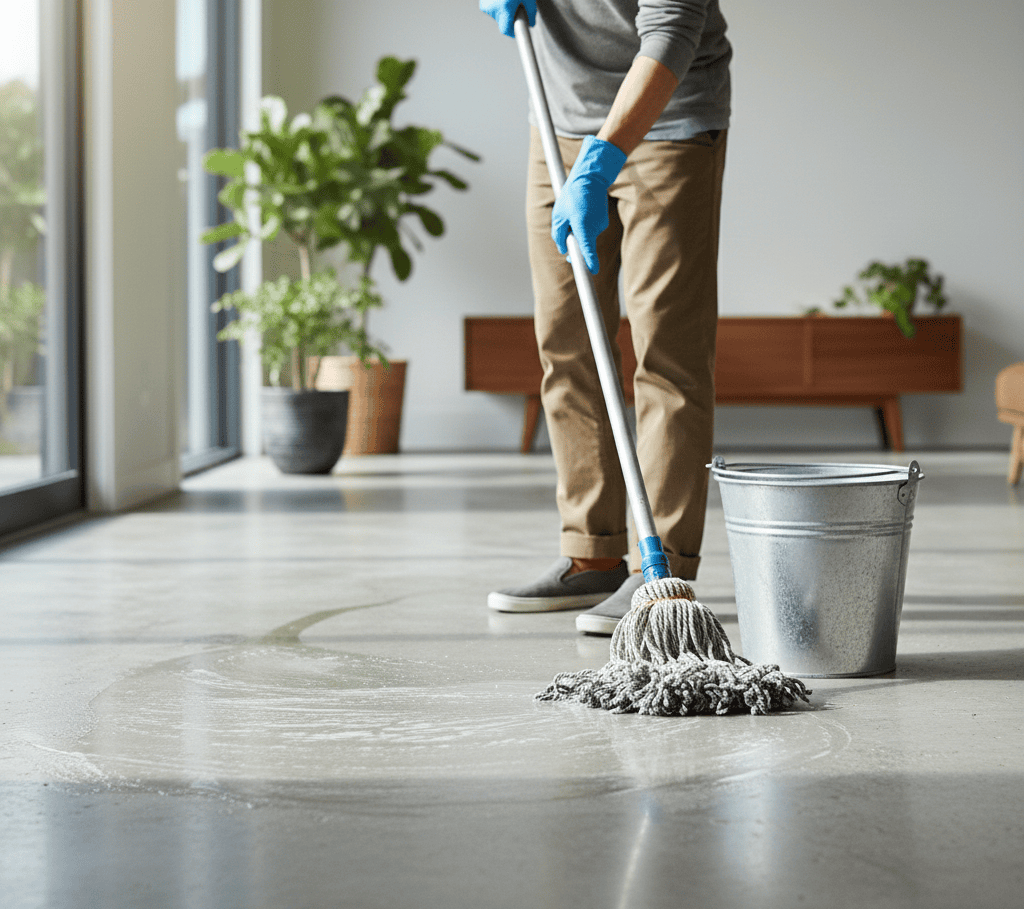
Here is the process we recommend to keep your concrete looking its best:
Routine Cleaning (Weekly/Bi-Weekly)
- Sweep or Vacuum: Remove all loose dirt, dust, and debris to prevent scratching during mopping.
- Mop with pH-Neutral Solution: Mix your mild cleaner with warm water. Avoid leaving standing water, especially indoors.
- Rinse (Optional but Recommended): For interior floors, a quick rinse with clean water removes soap residue that could attract dirt.
Deep Cleaning and Stain Treatment (As Needed)
- Treat Stains First: Apply degreaser or a paste of baking soda and water directly to the stain. Let it sit for 20 to 30 minutes.
- Scrub: Use the appropriate brush for your surface. Repeat if necessary for tough stains.
- Rinse Thoroughly: Remove all cleaning agents. For exterior surfaces like patios, low-pressure rinsing is safe. Avoid high PSI on polished interior floors to prevent surface damage.
Keep These Chemicals Away From Concrete Floors
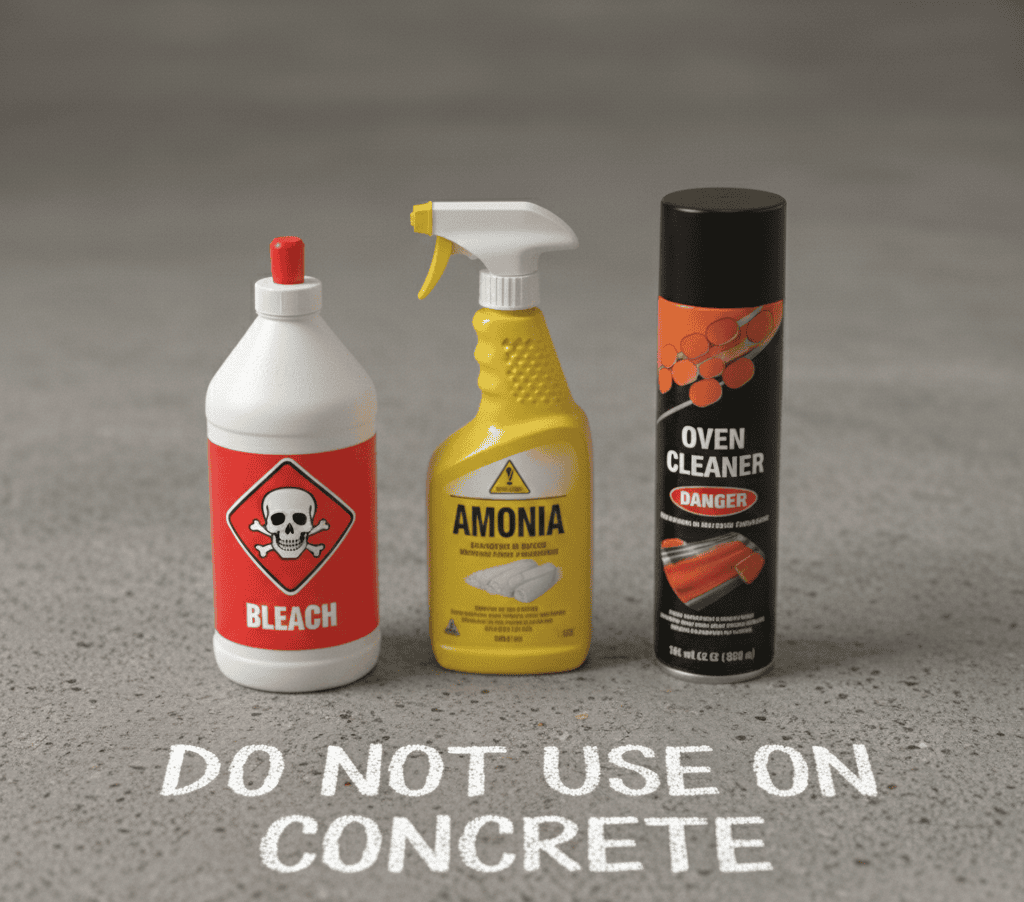
While concrete is durable, certain chemicals can damage its surface, break down sealants, or cause discoloration. To protect your investment, avoid using the following on your floors:
- Ammonia – Can dull polished surfaces and degrade sealants.
- Bleach – Harsh on sealants and may cause staining.
- Citrus-Based Cleaners – Acidic and can etch decorative finishes.
- Vinegar or Acidic Solutions – Can erode polished or stained concrete.
- Oven Cleaner or Strong Degreasers – May strip protective coatings.
- Salt and De-Icing Chemicals (indoors) – Can corrode concrete over time.
Instead, stick to pH-neutral cleaners, mild dish soap, or concrete-specific products. This ensures your floors stay beautiful, safe, and long-lasting.
The Importance of Sealing and Professional Care
The best defense against damage and difficult cleaning is a high-quality concrete sealant. Sealing the surface reduces porosity, improves cleaning, and protects decorative finishes. For exterior surfaces, resealing is generally recommended every 2 to 5 years, depending on wear and climate exposure. Interior polished floors may last longer between sealings.
For large commercial concrete floors or persistent issues, professional cleaning and maintenance may be necessary.
We’re proud to serve the concrete needs of West Michigan, from installation to maintenance. If you have questions about caring for your specific concrete surface, or are ready to upgrade to a beautiful, easy-to-maintain concrete floor, don’t hesitate to contact us today.

Dylan Cole is the owner of Cole Concrete, a concrete company committed to delivering quality craftsmanship and dependable service. With a passion for the trade and a personal stake in every job, Dyan and her team take pride in providing reliable concrete solutions for residential and commercial clients alike.