


Buffing concrete floors restores surface sheen by abrading away micro-scratches, worn paste, and dull oxidation—leaving a smoother, more reflective finish. The process uses a floor buffer fitted with diamond polishing pads, worked through progressively finer grits. Cole Concrete helps Grand Rapids homeowners understand what buffing can achieve and how to do it right.
March in West Michigan is the best time to assess what a hard winter does to your floors. Road salt, snow melt, and freeze-thaw cycling leave a well-maintained slab looking flat and scuffed. Buffing can often recover that in a weekend if you know what you’re doing.
What Buffing Can and Can’t Do for Concrete

Buffing abrades the surface to remove the worn layer and expose fresher paste underneath. You’re not adding anything; you’re refining what’s already there.
It improves gloss, smooths minor scratches, and restores luster. It does not fill cracks, repair spalling (where the surface flakes away), or fix delamination. If your floor has pitting or exposed aggregate, buffing highlights those problems.
For Grand Rapids homeowners with decorative concrete finishes, buffing is periodic maintenance, not a repair.
What You’ll Need Before You Start
Before you start, make sure you have the right equipment. A floor scrubber or orbital sander won’t work here. Neither creates enough friction to cut into concrete. You’ll need:
- Floor buffer (low-speed, ~175 RPM) or variable-speed angle grinder for tight areas
- Diamond polishing pads: 100, 400, 800 grit minimum. Go to 1500 or 3000 for high gloss
- Wet/dry vacuum and mop for cleaning between grits
- Concrete densifier (a silicate-based hardener) for older or porous floors
- Eye protection, knee pads, and a fine-particulate dust mask
West Michigan floors exposed to road salt this winter need a pH-neutral cleaner first. Salt residue reacts with the silicates in densifier and causes uneven hardening.
How To Buff a Concrete Floor Step by Step
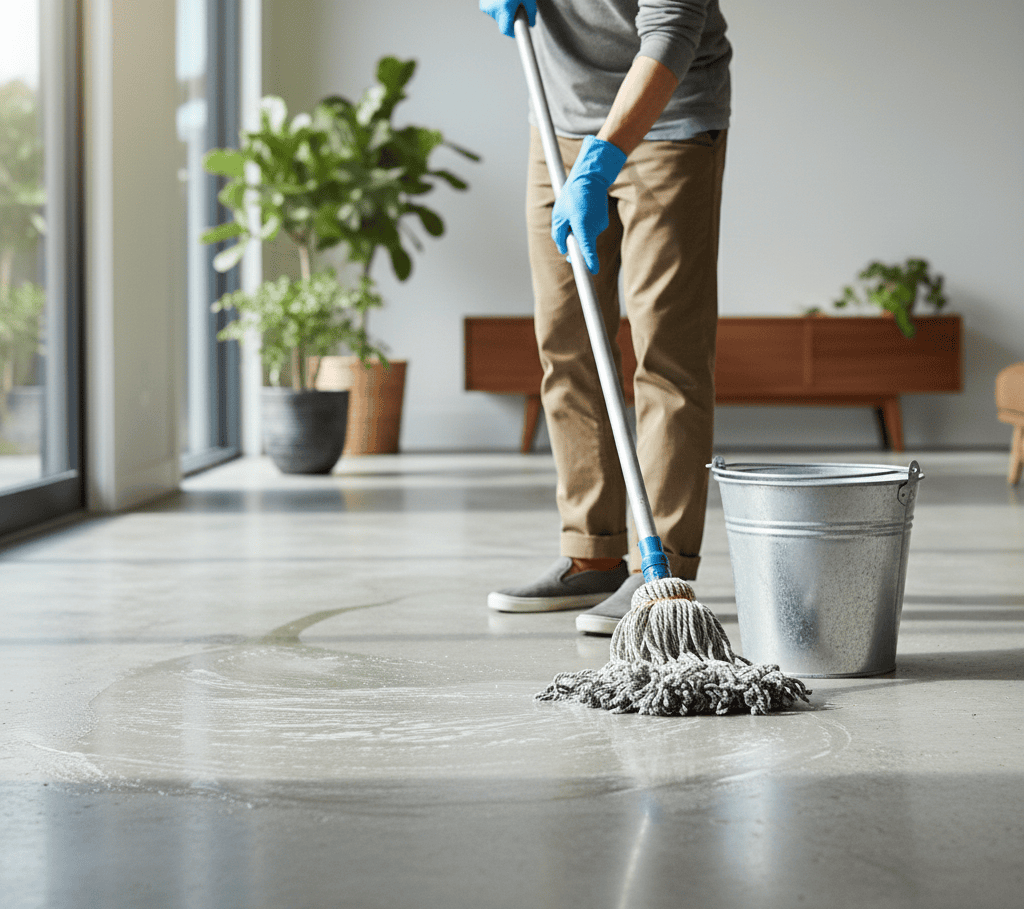
Work through this process in order. Skipping grits is where most DIY results fall short.
Step 1: Clean, Dry, and Inspect
Sweep and mop, then let the floor dry for at least two hours. Inspect under a work light held at a low angle (called raking light) to reveal scratches and low spots before starting.
Step 2: Work Through the Grits
Fit the 100-grit pad and make overlapping passes at a steady pace. If the pad skips, add water to activate the diamonds. For grits 100 through 800 on a low-speed buffer, keep the surface wet throughout. Higher grits (1500 and above) can be run dry if you switch to a high-speed burnisher. Vacuum and mop between each grit change. Progress through 400, then 800. By 800 grit you’ll have a consistent satin sheen. Continue to 1500 and 3000 for high gloss.
Step 3: Apply Densifier Between Passes
For floors more than five years old or that are visibly porous, apply a concrete densifier after the 100-grit pass. Work it in with a microfiber mop and allow at least 20 to 30 minutes so it can penetrate (check your specific product instructions: porous or older concrete may need up to 60 minutes). It reacts with calcium hydroxide to form a harder compound, giving finer grits more to work with.
Step 4: Seal the Surface
Even with a densifier applied earlier in the process, the freshly buffed surface benefits from a final sealer to protect against moisture and stains. Apply a penetrating or topical sealer after your final pass to lock in the finish and guard against foot traffic.
When Buffing Isn’t Enough
Spalling, delaminating coatings, or acid-etched concrete all require resurfacing, not buffing. The right move is knowing which side of that line you’re on before you rent a machine.
Grand Rapids homeowners at that point get an honest answer from Cole Concrete. The floor’s condition, not just budget, determines what comes next.
Frequently Asked Questions
Can you buff concrete floors without a floor buffer machine?
Small areas are manageable with a variable-speed angle grinder and diamond cup wheels, but a full floor without a dedicated buffer is impractical. The machine’s weight and consistent RPM produce an even finish across a large surface. Rent one for anything over 50 square feet.
How often should concrete floors be buffed to maintain their finish?
Most residential concrete floors benefit from buffing every two to four years. Garage floors in West Michigan that absorb winter salt and sand may need attention every two years. A quick annual inspection under raking light shows when the surface has dulled enough to warrant another pass.
Is buffing concrete floors the same as polishing them?
Buffing and polishing are related but distinct. Buffing covers the early-grit passes that remove surface wear. Polishing refers to fine-grit stages (800 grit and above) that build reflectivity. Cole Concrete applies both when refinishing decorative concrete. Skipping buffing leaves polishing marks visible under direct light.
Get Professional Results on Your Grand Rapids Floor
Buffing delivers when the floor is sound and you follow the grit sequence. When damage runs deeper than the surface, no amount of polishing changes that.
If your floor needs more than a refresh, reach out to Cole Concrete. Dylan Cole and his crew bring four generations of concrete expertise to West Michigan projects. You can also get an instant quote online before committing to anything.

Dylan Cole is the owner of Cole Concrete, a concrete company committed to delivering quality craftsmanship and dependable service. With a passion for the trade and a personal stake in every job, Dyan and her team take pride in providing reliable concrete solutions for residential and commercial clients alike.