


Let’s be honest: West Michigan weather is brutal on concrete driveways. One season, your driveway looks pristine, and the next, it’s riddled with cracks from our infamous freeze-thaw cycles. Before you assume you need professional help (and a hefty repair bill), know this: many common driveway cracks are surprisingly DIY-friendly.
Cole Concrete has been helping homeowners in Grand Rapids and the surrounding areas since 2016, and we believe in empowering our clients with the knowledge to care for their investment. In this guide, we share step-by-step tips for fixing cracks and damage in your driveway.
Why Do Concrete Driveways Crack in Michigan?

Before you can effectively repair a crack, it’s important to understand its cause. In Michigan, the primary culprit is often the weather. Water seeps into small pores and cracks in the concrete. When temperatures drop, it freezes and expands. This expansion exerts significant pressure on the concrete, widening existing cracks and creating new ones. Other factors that can contribute to cracking include:
- Heavy Loads: Parking heavy vehicles, such as RVs or construction equipment, on your driveway can cause stress fractures.
- Improper Installation: A poorly prepared base or an incorrect concrete mix can lead to a weaker slab that is more susceptible to damage.
- Soil Movement: The ground beneath your driveway can shift and settle over time, causing the concrete to crack under the strain.
- Tree Roots: The powerful roots of nearby trees can grow beneath the slab and push upward, causing significant cracking and displacement.
Your DIY Concrete Repair Toolkit
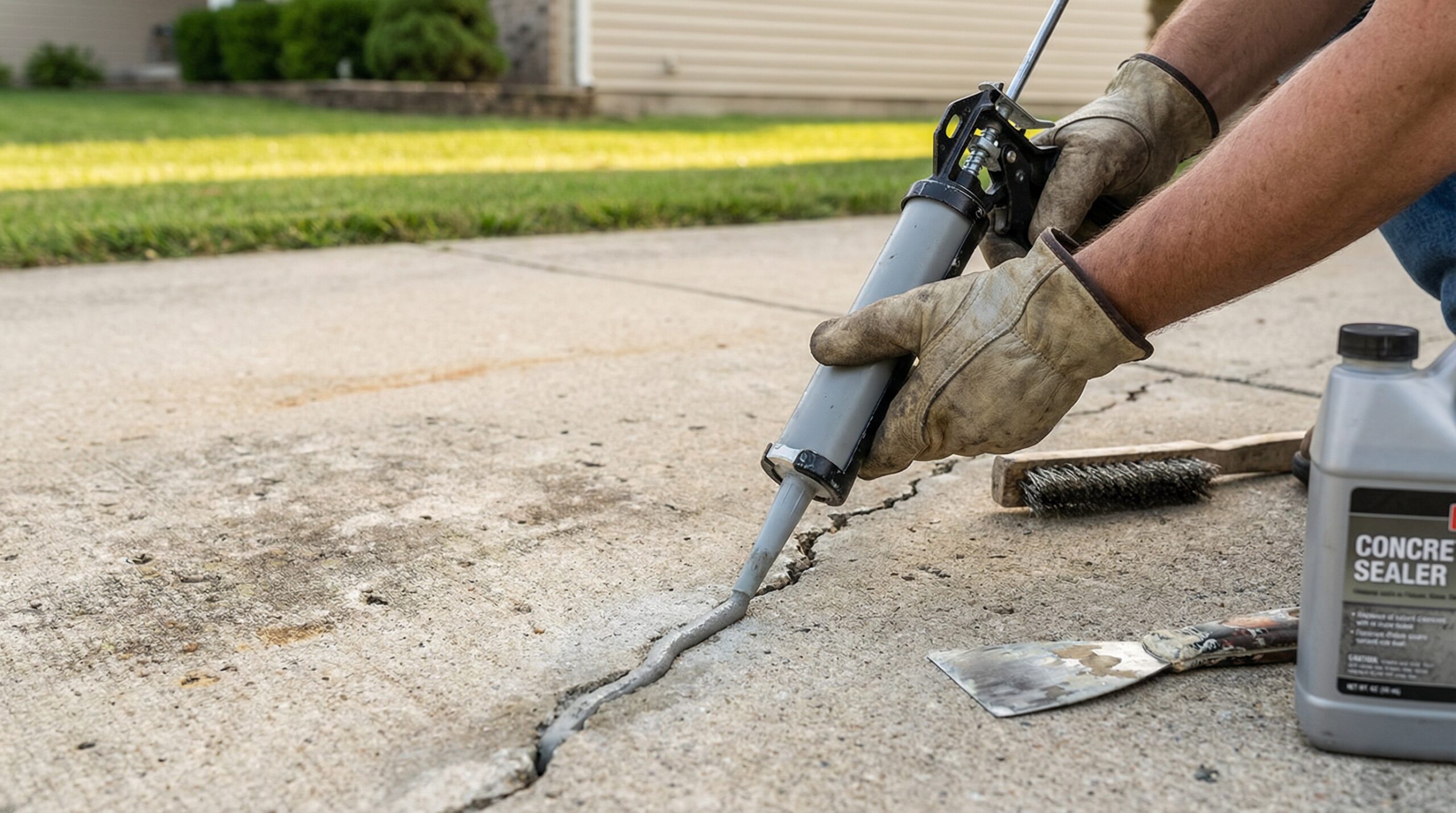
For most minor repairs, you’ll need a few essential tools and materials. You can find these at your local hardware store.
- Wire Brush – To clean out loose debris from the crack
- Pressure Washer or Hose – For a thorough cleaning of the repair area
- Putty Knife or Trowel – To apply and smooth the repair material
- Caulk Gun – For applying crack filler from a tube
- Concrete Crack Filler – For small cracks (less than 1/4 inch wide)
- Concrete Patching Compound – For larger cracks (greater than 1/4 inch wide)
- Concrete Sealer – To help protect repaired areas and the driveway surface
Step-by-Step Guide to Repairing Driveway Cracks
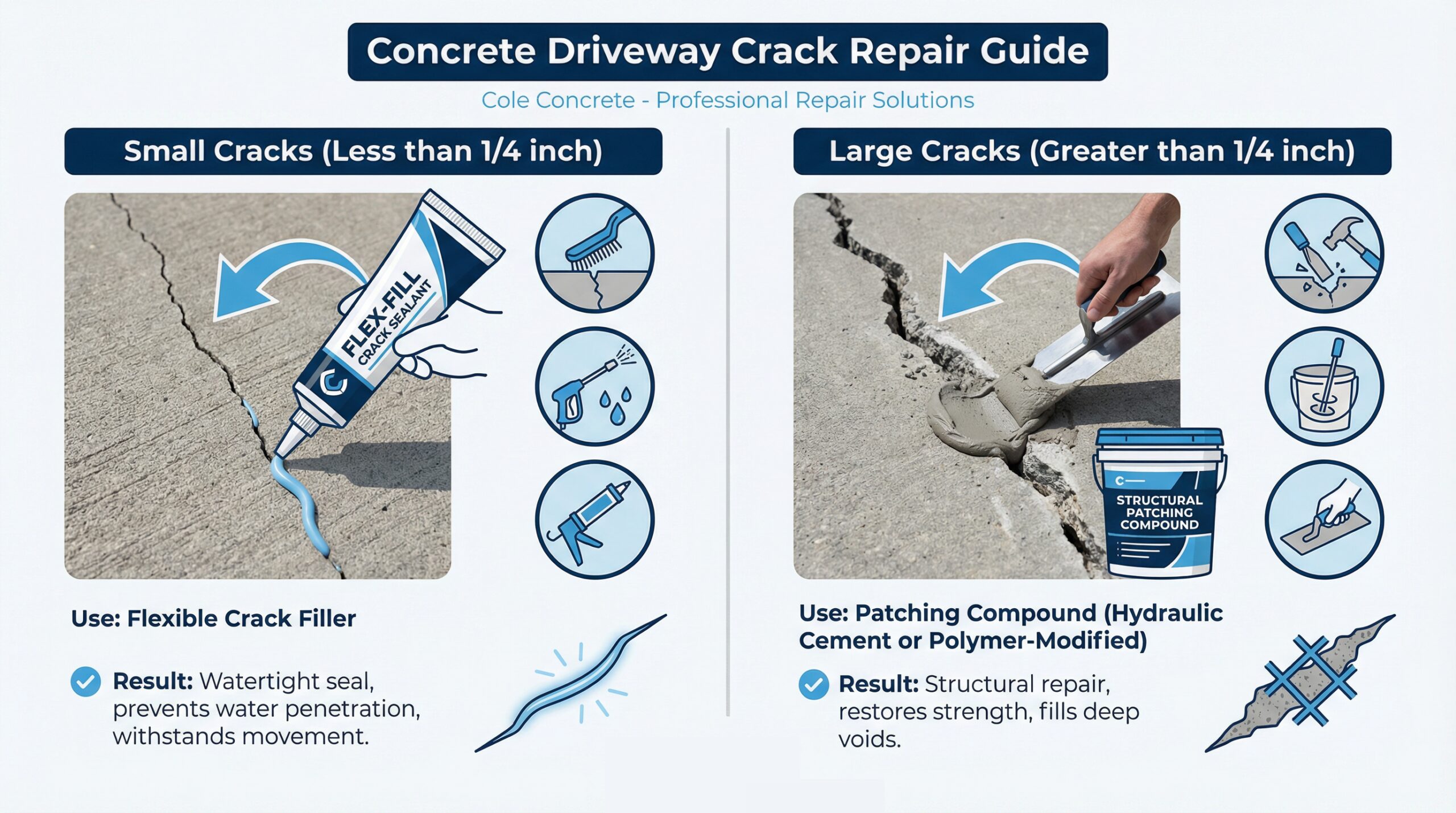
You’ve got your tools and you understand the problem—now it’s time to fix it. Here’s exactly how to repair those driveway cracks the right way, step by step.
Step 1: Prepare the Damaged Area
A successful repair starts with a clean surface. Use a wire brush to remove any loose concrete, dirt, or debris from inside the crack. For a deeper clean, use a pressure washer or a hose with a high-pressure nozzle to flush out any remaining particles. It’s crucial to let the area dry completely before moving on to the next step since moisture can prevent the repair material from bonding correctly.
Step 2: Choose the Right Repair Material
The type of crack will determine the best product for the job. For small, hairline cracks (less than 1/4 inch wide), a flexible concrete crack filler is the ideal choice. This product is designed to flow into the crack and create a flexible, watertight seal. For larger cracks, a concrete patching compound is necessary. This cement-based material will provide a more durable and structural repair.
Step 3: Apply the Repair Material
For small cracks, simply apply the crack filler into the crack, slightly overfilling it. Use a putty knife to smooth the filler and feather it into the surrounding concrete. For larger cracks, mix the patching compound according to the manufacturer’s instructions. Use a trowel to press the compound firmly into the crack, ensuring there are no air pockets. Smooth the surface to match the existing driveway.
Step 4: Seal the Repair
After the repair material has fully cured (check the manufacturer’s instructions for drying times), applying a quality concrete sealer—especially over repaired areas—can protect the surface from moisture, chemicals, and UV rays, reducing future cracking.
When To Call the Professionals at Cole Concrete

While DIY repairs are great for minor issues, some situations require the expertise of a professional concrete contractor. If you notice any of the following on your concrete driveway, it’s time to give us a call:
- Large, Deep, or Widespread Cracks: If your driveway has numerous cracks, or if the cracks are more than an inch wide or deep, this could indicate a more serious underlying problem.
- Sunken or Uneven Slabs: If sections of your driveway are sunken or are no longer level, it indicates a failing base and should be addressed by a professional.
- Structural Damage: If you see signs of crumbling or significant deterioration, a simple patch won’t be enough. The damaged section may need to be replaced.
Cole Concrete has the experience and equipment to handle all types of concrete repair and replacement. We can assess your damaged driveway and recommend the most cost-effective and long-lasting solution.
Visit our About page to learn more, or contact us today for a free estimate. Let us help you restore your driveway’s beauty and safety.
Dylan Cole is the owner of Cole Concrete, a concrete company committed to delivering quality craftsmanship and dependable service. With a passion for the trade and a personal stake in every job, Dyan and her team take pride in providing reliable concrete solutions for residential and commercial clients alike.